March 14th and 15th
Day 10 and 11 – Baden-Baden and Strasbourg
This morning brought us to the Caracalla Spa in Baden-Baden. No photos because none were allowed because, you know, near nudity. Actually, there was a separate level where clothes were not permitted. We did not go there…
The rest of the pools were nice though. There were four hot pools ranging in temperature from 34C to 38C, and a cold plunge pool at 18C. We made the rounds two or three times between the hot pools, but didn’t bother with the cold pool — been there, done that at home, don’t need to do it here. The hot pools had varying forms of fountains and jets, and one of them had a lazy river which was fun. Another one had jets in the center of the pool that I had fun balancing on like it was a seat; shift a little too much and you end up getting pushed around, hehe.
This was the first day that we managed to almost lose a passenger. The tour guide neglected to count heads before leaving the bus stop, and the passenger’s partner didn’t pipe up for nearly five minutes after we were on the road heading back to the ship. We returned to the spa bus stop so Cathy, Hannah, and her ladies could go look for the passenger. Normally they would have tried calling her, but it turns out she couldn’t get her SIM card to work so she didn’t have a working cell phone, or something to that effect. The ladies located the passenger fairly quickly, she and her partner were duly embarrassed and apologetic, and we went on our way.
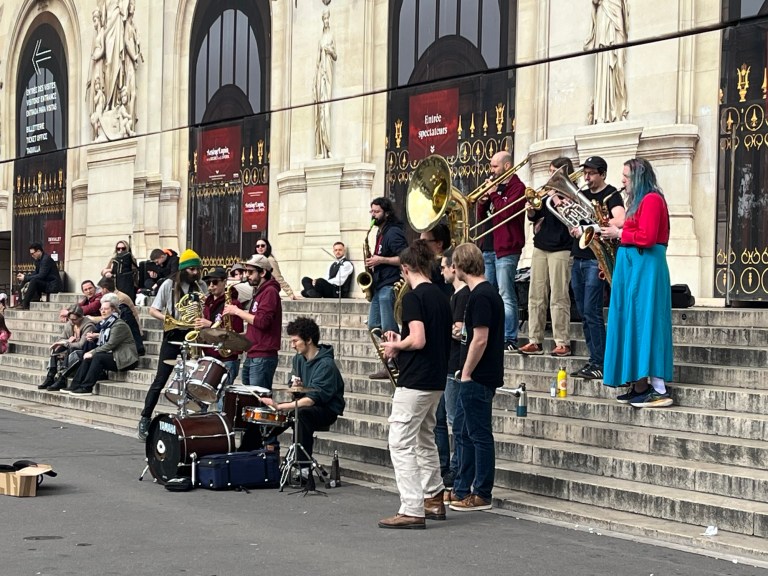
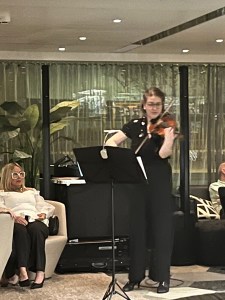
After lunch on the ship Amanda performed some musical numbers for us and the Captain hosted a farewell cocktail before supper as we sailed for Strasbourg. After docking in Strasbourg we were entertained by a solo violinist. She apparently travelled an hour to get to us, and I was certainly grateful. She was very, very good! I just wish I’d remembered to write her name down…
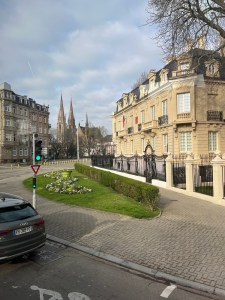
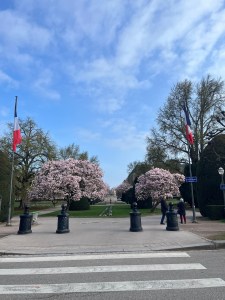
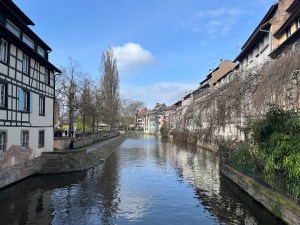
The next day we went on the guided walking tour of the French side of Strasbourg. The magnolia trees were in bloom, the architecture was lovely and varied, and the guide was informative.
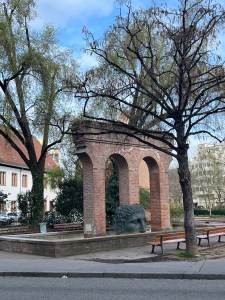
We passed by the Consulate General of Russia, which was constructed in 1904. We passed by the Place de la Republique, which is a lovely park. We passed by the Fontaine de Janus (Birth of Civilization) which is meant to depict the two-faced Roman god Janus symbolizing both the French and German heritage in the region.
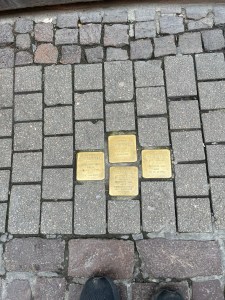
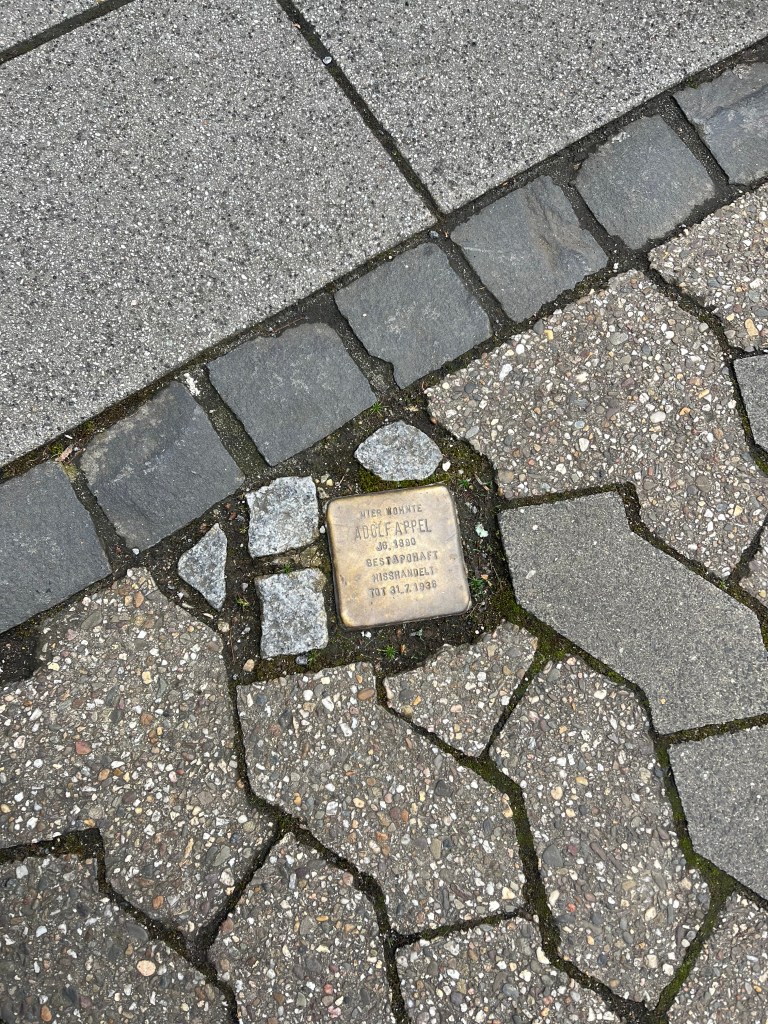
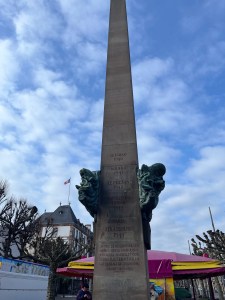
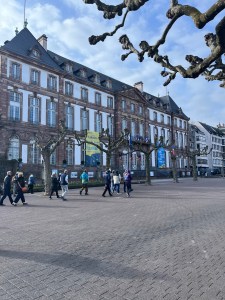
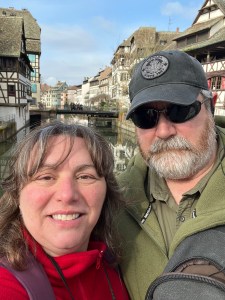
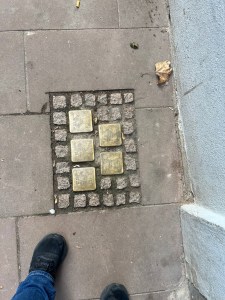
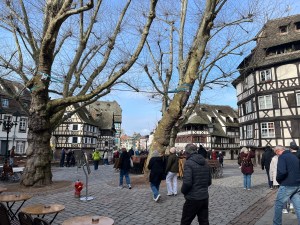
The Koufra Obelisk is a historical marker for the French military’s efforts during the liberation. Strasbourg City Hall is housed in an 18th century building that originally served as a palace for the Earl of Hanau-Lichtenberg. Petite France is a UNESCO World Heritage site with canals and half-timbered houses dating back to the Middle Ages. It has a lovely square with cobblestone streets and a few more stumbling stones.
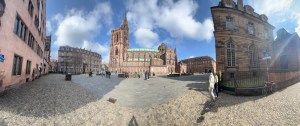
As we approached the historic center moving towards the Cathedral the streets were lined with various touristy storefronts and restaurants, and street vendors. We purchased a few souvenirs here (read: shot glasses, a table cloth, and a crochet Christmas ornament). I let myself get talked into paying a few coins for a rose, but firmly declined subsequent efforts from other sellers wandering through the crowds. Our guide had warned us about them. Cranes are still a thing around here and we got a laugh when we noticed several vendors selling crane hats. I threatened to buy one for Dan, which I think would have been hilarious to see him wearing.
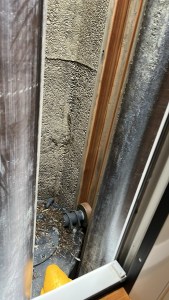
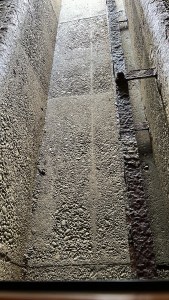
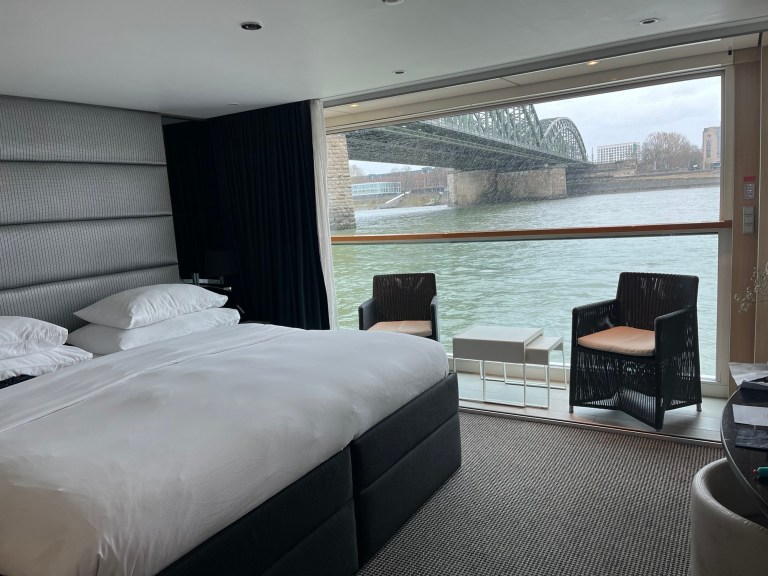
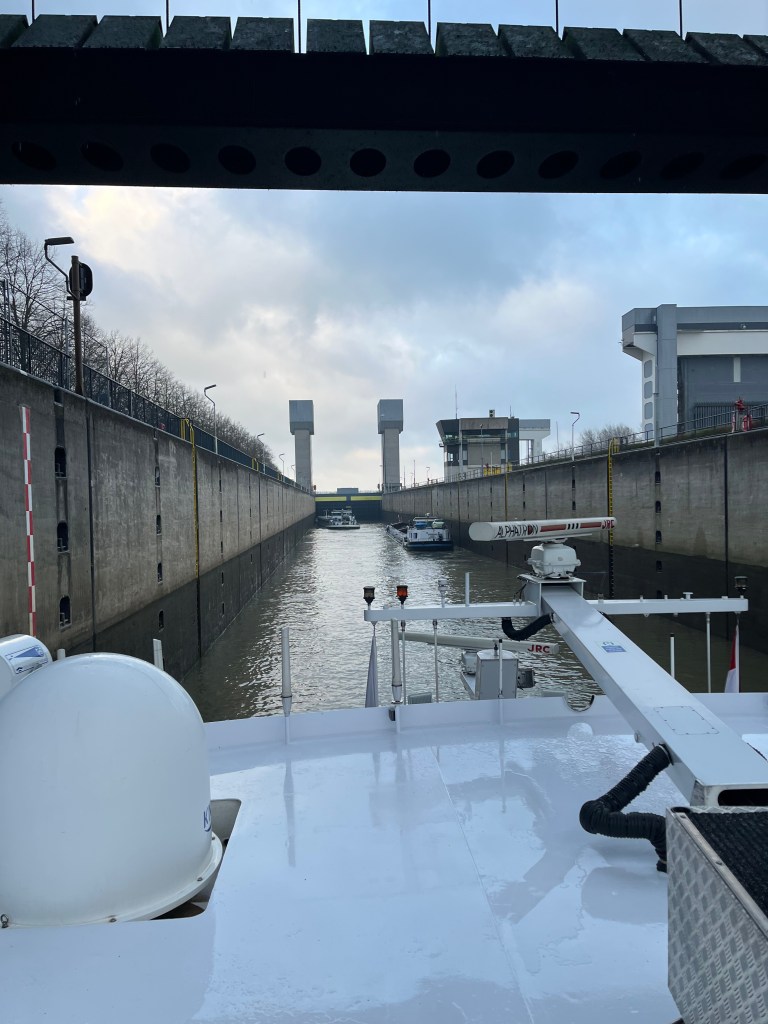
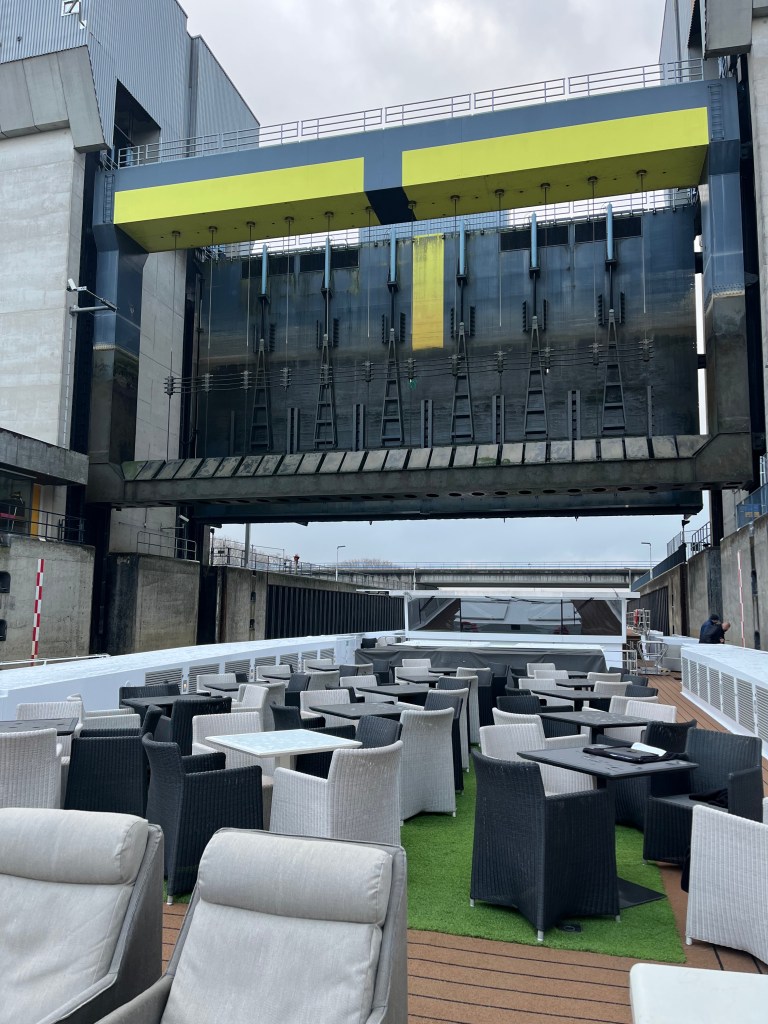
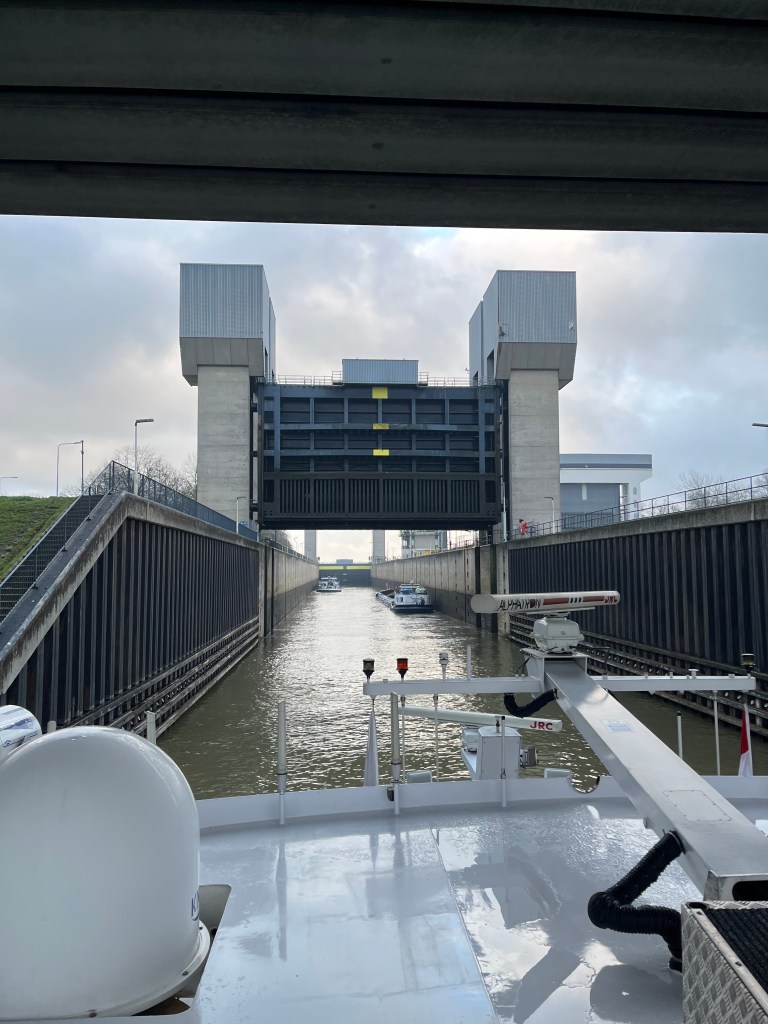
We returned to the ship for lunch and set sail for Huningue port. We passed through several more lochs on the way, and I happened to be in our room for one of them. It was surreal seeing the passage and rising through our balcony window, which I had opened. No, I did not reach out the window, despite really wanting to. I recognized the inherent danger in doing such a thing. Murphy can be a bitch. The afternoon involved a cruise quiz, and the evening involved “An Evening with the Stars” game. It also, sadly, involved packing our bags for our disembarkation tomorrow morning.
Adelle and Dan